Failing Dental Implants - Lake St Louis, MO
Safeguard Your Smile and Enhance Your Confidence

“A Bad Experience With The Dentist Made Me Feel Self Conscious”
Cutting-Edge Treatments to Protect Your Dental Implants
Your dental implants can last a lifetime with proper care and routine checkups. However, there are rare situations when they can become compromised due to poor placement or bacterial contamination. If you’re struggling with failing dental implants, we can help!
Laser Assisted Peri-Implantitis Protocol (LAPIP) is a specialized treatment for gum disease that can cause implant failures. With this technique, we precisely tackle infected gum tissue around your implants. LAPIP is the least invasive treatment for troubled dental implants, bringing back a healthy and confident smile.
What Causes Dental Implants to Fail?
- Bacterial infection of the gums
- Lack of bone density impairing osseointegration
- Poor implant placement
- Smoking or tobacco use
- Reduced blood flow to the implant area
How Can Lasers Reverse Peri-Implantitis?
Peri-implantitis is a gum disease affecting the tissue surrounding an implant post. It may happen immediately after implant placement as a complication from surgery or develop later. LAPIP treatment saves failing dental implants by vaporizing bacteria, diseased tissue, pathologic proteins, and other contaminants from the soft tissue surrounding an implant without damaging your healthy cells.
The specialized laser also stimulates the regeneration of healthy bone tissue, helping to rebuild a stable connection with the implant post. The final result? Stable implants, free of inflammation and infection, that will last decades.
The Advantages of LAPIP Treatment
- Eliminates the root causes of peri-implantitis
- Creates a closed, sterile environment for fast healing and little risk of complications
- Predictable success rates
- No surgery or stitches
- Comfortable process
- Minimal downtime
- Rebuilds lasting stability for your smile
Our LAPIP Process
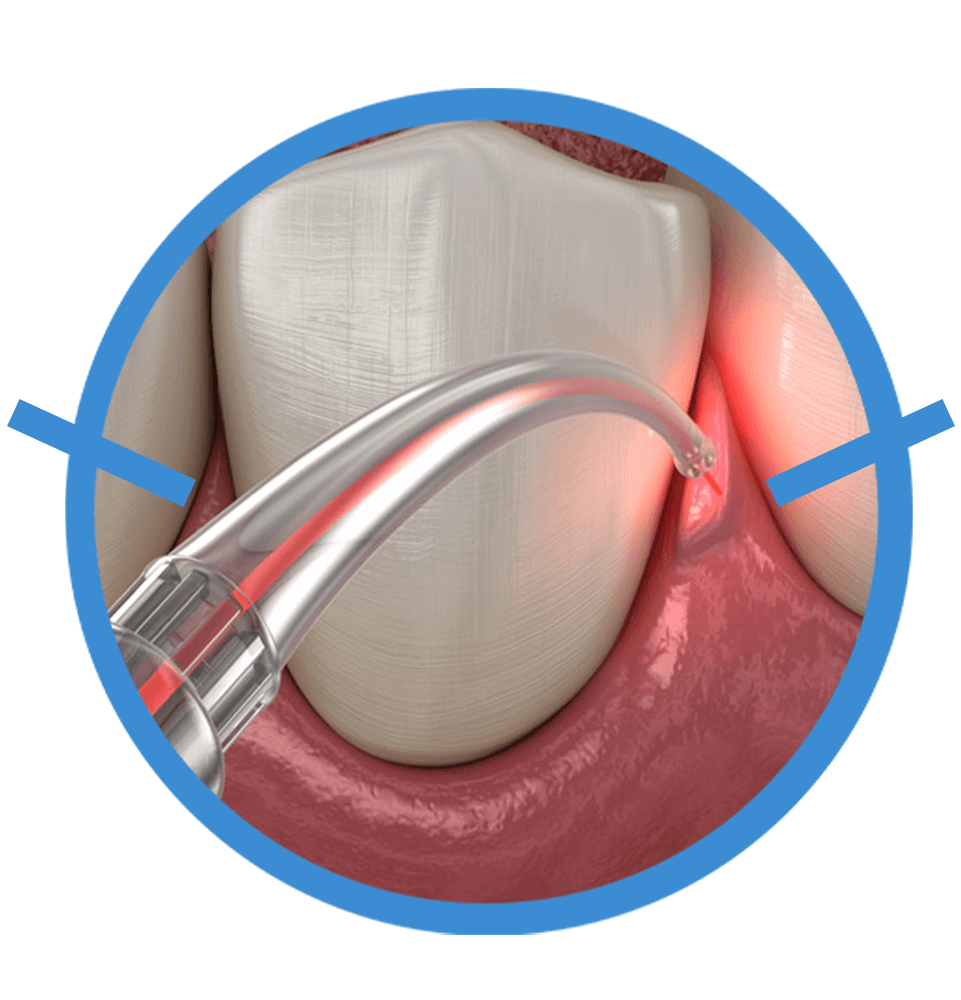
LAPIP is a nonsurgical method for treating peri-implantitis. Once we’ve identified areas of potential implant failures, we will carefully insert a tiny fiber-optic tip between the gum tissue and the infected implant post. The laser vaporizes bacteria and diseased tissue without affecting healthy cells.
We’ll use an ultrasonic scaler to clean the area to remove any hardened deposits and debris left behind by the laser process, just like at your routine dental cleanings. We will then modify the shape of the bone tissue to create a better surface to regrow healthy bone structure.
Once thoroughly cleaned, we’ll use the laser again to stimulate natural healing compounds and create a seal for ideal healing. We will then adjust your bite to relieve excess strain on your dental implants and prevent future damage. Your body’s natural healing process takes care of the rest! The bone and gum tissue will heal tightly to the implant and create renewed attachment, so your smile stays strong and beautiful for years.
Schedule An Appointment
I understand the information disclosed in this form may be subject to re-disclosure and may no longer be protected by HIPAA privacy regulations and the HITECH Act.

Find out if you're a
candidate for dental implants
Answer the Following Questions To Learn more about our pricing and financing options.

Questions Our Patients Ask About Dental Implant Failure
Common warning signs can include persistent pain, swelling, bleeding around the implant, gum recession, difficulty chewing, or an implant that feels loose. If you notice changes around a dental implant, contact New Creation Dental Care in Lake St. Louis, MO, for an evaluation.
Dental implants may fail because of infection, insufficient bone integration, excessive bite forces, smoking, poor oral hygiene, certain health conditions, or inflammation around the implant. Determining the cause is important before deciding on the next treatment step.
A failed dental implant may need to be removed so the area can heal. Depending on the condition of the bone and gums, additional treatment such as bone grafting may be recommended before another implant is considered.
Yes. Infection and inflammation around an implant can damage the gum and supporting bone. A condition called peri-implantitis can contribute to bone loss around the implant and may threaten its stability if it is not treated.
A dental implant should not feel loose. Sometimes the implant itself is stable and only the crown or another restorative component has loosened, but this should still be evaluated promptly. Patients in Lake St. Louis should avoid chewing on the area and schedule an examination.
Yes, a full-arch zirconia bridge can be used to replace an entire upper or lower arch of teeth when it is supported by an appropriate number and position of dental implants.
Patients with widespread missing or failing teeth may want to explore full mouth dental implants to determine whether a fixed full-arch restoration is appropriate.
In many cases, yes. Whether another implant can be placed depends on why the original implant failed, how much healthy bone remains, whether infection is present, and the patient’s overall oral health. After the area is treated and healed, a new implant may sometimes be possible.