Missing teeth can affect much more than the appearance of your smile. Tooth loss may make it harder to eat comfortably, speak clearly, and feel confident in social situations. Dentures offer a customized tooth-replacement solution that can restore function and create a more complete, natural-looking smile.
At New Creation Dental Care in Lake St. Louis, Dr. Matthew Boscia provides full, partial, and implant-supported dentures for patients from Wentzville and surrounding Missouri communities.
Modern dentures are designed with improved materials and techniques to provide better comfort, durability, and appearance than many older appliances. Below, we explain the available types of dentures, how treatment works, and how to care for your new smile.
What Are Dentures?
Dentures are custom-made dental prostheses used to replace multiple missing teeth. Depending on the patient’s needs, a denture may replace all the teeth in an upper or lower arch or fill several spaces while preserving the remaining natural teeth.
Traditional dentures rest on the gums and can be removed for cleaning. Implant-supported dentures attach to dental implants placed in the jaw, providing additional stability and retention.
A properly designed denture may help:
- Restore the visible appearance of missing teeth
- Improve chewing ability
- Support clearer speech
- Provide support for the lips and cheeks
- Maintain spacing between remaining teeth
- Increase confidence when smiling and interacting with others
Learn more about available options on our full, partial, and implant-supported dentures page.
What Are the Benefits of Dentures?
Dentures can provide functional, cosmetic, and quality-of-life benefits for people experiencing extensive tooth loss.
Improved Chewing Function
Missing teeth can make many foods difficult or uncomfortable to eat. Dentures restore biting surfaces so patients can chew a broader range of foods. Chewing ability varies according to the type of denture, its fit, and the condition of the underlying gums and bone.
Clearer Speech
Teeth play an important role in forming certain sounds. Replacing missing teeth may improve speech clarity, although a brief adjustment period is common while the tongue and facial muscles adapt to the new appliance.
Facial Support
Extensive tooth loss may reduce support for the lips and cheeks, contributing to a sunken or collapsed facial appearance. A carefully designed denture can restore some of this support and create more balanced facial proportions.
Enhanced Confidence
A complete smile can help patients feel more comfortable speaking, laughing, eating, and appearing in photographs. Dentures are customized for the individual patient rather than produced as a one-size-fits-all appliance.
Replacement of Multiple Teeth
Dentures provide an efficient way to replace several or all missing teeth within one dental arch. They may be suitable for patients who do not want—or are not currently candidates for—an individual implant restoration for each missing tooth.
What Types of Dentures Are Available?
There are several types of dentures, and each addresses a different degree of tooth loss. Dr. Boscia will evaluate your oral health, remaining teeth, bone structure, lifestyle, and treatment goals before recommending an option.
Full Dentures
A full denture, also called a complete denture, replaces all the teeth in the upper jaw, lower jaw, or both. The removable appliance rests on the gums and is designed to recreate a full arch of teeth.
An upper denture typically covers part of the roof of the mouth and may receive additional retention from suction. A lower denture has a horseshoe shape that leaves room for the tongue. Because the lower jaw provides less surface area for support, lower dentures may be more likely to move during eating or speaking.
Full dentures may be appropriate for patients whose remaining teeth are missing, severely damaged, or cannot be predictably restored.
Partial Dentures
A partial denture replaces several missing teeth when some healthy natural teeth remain. It fills the open spaces and typically receives support from the surrounding teeth and gums.
Depending on its design, a partial denture may use:
- A metal framework
- Acrylic or flexible materials
- Clasps that fit around selected teeth
- Precision attachments incorporated into dental restorations
Replacing missing teeth with a partial denture can improve function and help prevent neighboring teeth from drifting into the open spaces.
Immediate Dentures
Immediate dentures are placed shortly after the remaining teeth are removed. They allow a patient to avoid going without visible teeth during the initial healing period.
Because the gums and jawbone change shape as they heal after extraction, immediate dentures commonly require adjustments, relining, or eventual replacement. They may serve as a temporary appliance while the mouth prepares for the definitive denture.
Implant-Supported Dentures
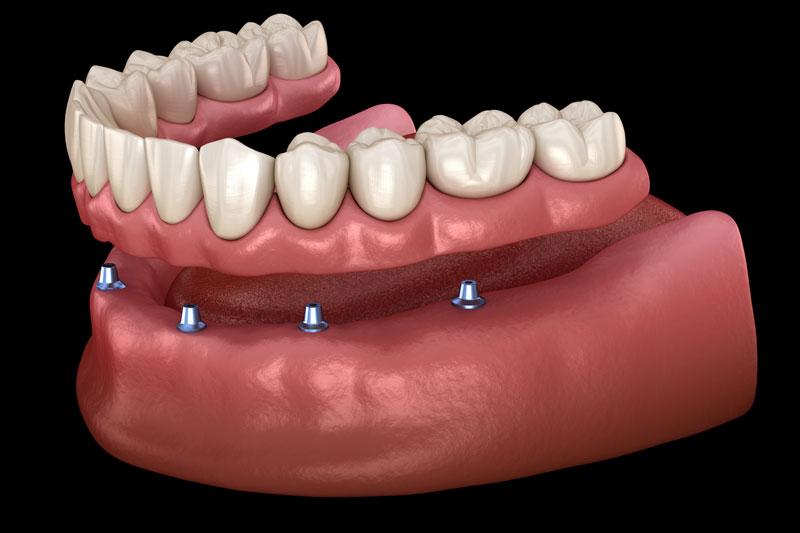
Implant-supported dentures attach to dental implants that have been surgically placed in the jawbone. New Creation Dental Care offers implant-supported options commonly called Snap-On dentures.
Specialized connectors on the implants fit into corresponding attachments inside the denture. This design helps reduce slipping, shifting, clicking, and movement while the patient eats or speaks.
Potential benefits of implant-supported dentures include:
- Improved stability and retention
- Greater confidence while eating and speaking
- Reduced movement against the gums
- Improved chewing ability
- Less reliance on denture adhesives
- Stimulation of the jawbone around the implants
- Removable or fixed restoration options, depending on the treatment plan
Implant-supported dentures generally require sufficient bone and healthy oral tissues. Patients with bone loss may need additional treatment before implants can be placed.
What Are Snap-On Dentures?
Snap-On dentures are removable dentures stabilized by dental implants. Although the patient can remove the prosthesis for cleaning, it connects securely to attachments placed on the implants.
This option combines the convenience of a removable denture with greater stability than a conventional gum-supported appliance. The exact number and location of implants depend on the patient’s anatomy, bone condition, and planned restoration.
Snap-On dentures may be especially helpful for people who:
- Struggle with a loose lower denture
- Use denture adhesive frequently
- Experience rubbing or sore spots from movement
- Avoid certain foods because their dentures shift
- Want a removable option with additional stability
- Have adequate health and bone support for implant placement
Visit our implant-supported denture page to learn more about Snap-On dentures.
What Is the Difference Between Traditional and Implant-Supported Dentures?
Traditional dentures rest on the gum tissue and depend on their shape, suction, facial muscles, and sometimes dental adhesive for retention. Implant-supported dentures connect to implants anchored within the jawbone.
Because implant-supported dentures attach to a stable foundation, they generally provide greater retention during chewing and speaking. The implants also transfer some biting forces into the jawbone.
Traditional dentures do not require implant surgery and may involve a lower initial cost. They can be an appropriate option for many patients, including some who cannot undergo implant treatment because of their health, bone condition, preferences, or budget.
The most appropriate choice depends on individual circumstances rather than one option being right for every patient.
What Is the Process for Getting Dentures?
The denture process begins with a comprehensive evaluation and continues through planning, fabrication, fitting, and follow-up care.
1. Consultation and Oral Examination
Dr. Boscia will examine your teeth, gums, bite, and jaw structure. He will also review your medical history, current medications, previous dental treatment, and goals for your new smile.
Diagnostic records may include:
- Digital X-rays
- Photographs
- Dental impressions or digital scans
- Bite measurements
- An evaluation of the jawbone and supporting tissues
If natural teeth remain, Dr. Boscia will determine whether they can be preserved, restored, or used to support a partial denture.
2. Treatment Planning
After the evaluation, the available denture options are explained. Your treatment plan may include full dentures, partial dentures, immediate dentures, implant-supported dentures, or another tooth-replacement solution.
The discussion may cover the treatment sequence, expected timeline, costs, maintenance requirements, and the advantages and limitations of each option.
3. Preparatory Dental Care
Some patients require treatment before their final denture can be made. Preparatory care may include:
- Removing non-restorable teeth
- Treating gum disease or infection
- Repairing teeth that will support a partial denture
- Reshaping uneven bone
- Bone grafting for planned dental implants
- Placing implants for an implant-supported restoration
4. Impressions and Bite Records
Detailed impressions or digital scans are used to record the shape of the mouth. Bite measurements help establish how the upper and lower jaws should meet.
The dentist also considers tooth size, shape, color, alignment, lip support, facial proportions, and how much tooth structure shows when the patient smiles and speaks.
5. Trial Fitting
Before the final denture is completed, a trial version may be evaluated. This appointment allows the dentist and patient to review the appearance, bite, tooth arrangement, and overall proportions.
Adjustments can be requested before the final materials are processed.
6. Final Placement and Adjustments
When the completed denture is ready, Dr. Boscia evaluates its fit, stability, bite, and appearance. Pressure areas may be adjusted to improve comfort.
Additional visits are often needed after the patient begins wearing the denture. Even a carefully fabricated appliance may create sore spots as the gums adapt to new pressure.
How Long Does It Take to Get Dentures?
The timeline depends on the type of denture and whether preliminary treatment is required.
A conventional full or partial denture may require several appointments for examination, impressions, bite records, trial fittings, fabrication, and final adjustments. If teeth need to be extracted, the gums may be allowed to heal before the definitive denture is made.
Immediate dentures can be prepared before extractions and delivered on the day the teeth are removed. However, they usually require adjustments or relining as the mouth heals.
Implant-supported dentures generally take longer because the implants need time to integrate with the jawbone. The treatment may also include bone grafting, implant placement, healing, and fabrication of the final prosthesis.
How Long Does It Take to Adjust to New Dentures?
Most patients experience an adjustment period after receiving new dentures. The appliance may initially feel bulky, and the tongue and facial muscles need time to adapt.
Common temporary experiences include:
- Increased saliva production
- Minor changes in speech
- Difficulty chewing certain foods
- Mild gum tenderness
- A sensation that the denture is larger than expected
- Temporary sore spots
Practice and appropriate professional adjustments generally improve comfort and control. Patients should not attempt to reshape or adjust their dentures at home, as this can permanently damage the appliance or create an uneven bite.
How Do You Eat With New Dentures?
Begin with soft foods cut into small pieces. Chew slowly and use both sides of the mouth at the same time to help stabilize the denture.
Foods that may be easier during the adjustment period include:
- Eggs
- Yogurt
- Cooked vegetables
- Soft fish
- Mashed potatoes
- Pasta
- Applesauce
- Soups that are not excessively hot
As comfort improves, gradually reintroduce firmer foods. Initially avoid very hard, sticky, tough, or chewy items that could destabilize or damage the appliance.
Implant-supported dentures may provide improved chewing stability, but patients should still follow the dentist’s dietary instructions, particularly during implant healing.
How Should Dentures Be Cleaned?
Dentures should be cleaned every day to remove food debris, plaque, and surface stains. Good hygiene also protects the gums, tongue, palate, and remaining natural teeth.
General denture-care recommendations include:
- Rinse the denture after meals when practical.
- Place a folded towel or basin of water beneath it before cleaning.
- Use a soft denture brush and nonabrasive denture cleanser.
- Clean every surface, including the areas that contact the gums.
- Brush the gums, tongue, and roof of the mouth with a soft toothbrush.
- Clean any remaining natural teeth thoroughly.
- Follow the dentist’s instructions regarding overnight removal and soaking.
- Rinse the appliance before placing it back in the mouth.
Ordinary toothpaste may be too abrasive for some denture materials. Hot or boiling water should also be avoided because it may distort the appliance.
Should You Sleep With Dentures In?
Many patients are advised to remove conventional removable dentures while sleeping. This gives the gum tissue time to rest and allows the appliance to be cleaned and soaked.
Instructions may differ during the first night after extractions or for certain implant-supported restorations. Follow the specific directions provided by Dr. Boscia rather than changing your wear schedule without professional guidance.
How Long Do Dentures Last?
Dentures are durable, but they are not expected to last forever. Normal wear may gradually affect the denture teeth and bite. The gums and jawbone also continue to change after natural teeth are lost, which can cause an appliance to become loose even when it remains in good condition.
A denture may need professional adjustment, relining, rebasing, repair, or replacement when:
- It moves or slips during normal use
- It repeatedly causes sore areas
- The denture teeth are worn
- The appliance is cracked or broken
- The bite feels uneven
- Speaking or chewing becomes more difficult
- Denture adhesive is needed more frequently
- The patient’s facial support has changed
Regular dental examinations help identify changes before they significantly affect comfort or oral health.
Do You Still Need Dental Checkups With Dentures?
Yes. Patients without natural teeth still need periodic professional examinations. The dentist evaluates the gums, tongue, cheeks, palate, jaw joints, bite, bone structure, and fit of the dentures.
These visits can also identify irritation, infection, abnormal tissue changes, excessive wear, or damage to the appliance. Patients with remaining teeth or dental implants need ongoing preventive care to protect those structures.
New Creation Dental Care provides comprehensive family and preventive dentistry for patients with natural teeth, dentures, and implant restorations.
Can Loose Dentures Be Fixed?
A loose denture may sometimes be improved with an adjustment, reline, or rebase. The correct solution depends on the appliance’s condition and how much the gums and jawbone have changed.
Denture adhesives may provide temporary assistance in certain situations, but frequent reliance on adhesive may indicate that the appliance no longer fits properly.
Patients who want greater stability may also be evaluated for implant-supported dentures. Dental implants can provide attachment points that help prevent a removable denture from lifting or shifting.
New Creation Dental Care evaluates concerns including missing teeth and loose dentures and can recommend an appropriate treatment plan.
Are Dentures or Dental Implants Better?
Dentures and dental implants offer different advantages. The best solution depends on a patient’s oral health, bone condition, medical history, treatment goals, preferences, and budget.
Traditional dentures:
- Do not require implant surgery
- Can replace many teeth with one removable appliance
- May have a lower initial treatment cost
- May be appropriate when implant treatment is not possible or desired
Dental implants and implant-supported restorations:
- Provide additional stability
- Transfer biting forces into the jawbone
- Can reduce movement during speaking and chewing
- May support a removable or fixed restoration
- Require surgery, healing, and adequate supporting bone
Some patients prefer a combination of the two options through an implant-supported removable denture.
Learn more about permanent tooth-replacement options on our dental implants page.
How Much Do Dentures Cost?
The cost of dentures varies according to the type of appliance, materials, number of teeth being replaced, required extractions, preparatory procedures, and whether dental implants are included.
Factors that may influence the total cost include:
- Full versus partial dentures
- Conventional versus immediate dentures
- Selected denture materials
- Number and complexity of extractions
- Need for gum or bone treatment
- Implant placement
- Number of implants
- Temporary restorations
- Follow-up adjustments or relining
An examination is necessary before an accurate treatment estimate can be provided. The dental team can explain projected costs, insurance considerations, and available financial arrangements during the planning process.
Why Choose Dr. Matthew Boscia for Dentures Near Wentzville, MO?
Successful denture treatment involves more than replacing visible teeth. The dentist must consider bite alignment, facial support, speech, comfort, stability, remaining teeth, gum health, and long-term maintenance.
Dr. Matthew Boscia is the founder of New Creation Dental Care and has more than 20 years of dental experience. His advanced implant education also allows him to evaluate both traditional and implant-supported denture solutions.
Dr. Boscia uses a personalized, patient-centered approach. He listens to the patient’s concerns, explains the available options, and develops a treatment plan based on individual health needs and priorities.
New Creation Dental Care offers comprehensive treatment under one roof, supported by modern technology and a compassionate, judgment-free team. Learn more about the practice on our About Us page.
Frequently Asked Questions About Dentures
What are dentures made from?
Dentures are commonly made with an acrylic base designed to resemble gum tissue and artificial teeth made from acrylic or other dental materials. Some partial dentures include a metal framework for additional strength and support.
Will dentures look natural?
Modern dentures can be customized for tooth color, shape, size, alignment, and gum appearance. The dentist also considers facial proportions, lip support, age, and personal preferences when designing the smile.
Will dentures change how I speak?
Speech may temporarily sound different while the tongue and facial muscles adapt. Reading aloud and repeating difficult words can help. Persistent clicking, movement, or speech problems may indicate that an adjustment is needed.
Can I eat normally with dentures?
Dentures can restore useful chewing function, although they may not feel exactly like natural teeth. Begin with soft foods, chew slowly on both sides, and gradually add firmer foods as comfort and control improve.
Do dentures prevent jawbone loss?
Traditional dentures replace visible teeth but do not replace tooth roots. The underlying jawbone can therefore continue changing over time. Dental implants transfer force into the bone and may help preserve bone in the areas surrounding the implants.
Do partial dentures damage natural teeth?
A properly designed and maintained partial denture should distribute pressure appropriately. However, plaque accumulation or excessive forces around supporting teeth can create problems. Daily cleaning and regular dental examinations are essential.
Can dentures be repaired if they break?
Many cracked or broken dentures can be professionally repaired, depending on the extent and location of the damage. Do not use household glue or attempt an at-home repair because this can damage the appliance and make professional correction more difficult.
Why do my dentures keep becoming loose?
The gums and jawbone naturally change shape after teeth are lost. These changes can reduce the fit of a denture over time. Weight changes, wear, damage, and certain health conditions may also affect fit.
Can I use denture adhesive every day?
Denture adhesive may improve retention for some patients when used correctly. However, needing increasing amounts may signal that the denture requires an adjustment, reline, or replacement. Adhesive should not be used to compensate indefinitely for a poor fit.
Who is a candidate for implant-supported dentures?
Candidates generally need suitable overall health, healthy oral tissues, and enough jawbone to support the implants. Bone grafting may be considered when bone volume is inadequate. A comprehensive examination is required to determine candidacy.
How many implants are needed for Snap-On dentures?
The number varies according to the jaw being treated, available bone, implant positions, bite forces, and planned restoration. Dr. Boscia will use examination findings and diagnostic imaging to recommend an individualized design.
Does dental insurance cover dentures?
Many dental insurance plans provide some coverage for dentures, but benefits, deductibles, waiting periods, replacement limits, and implant exclusions vary. Patients should review their individual plan and request a personalized estimate.
Schedule a Denture Consultation Near Wentzville, MO
If missing teeth or loose dentures are making it difficult to eat, speak, or smile comfortably, a personalized consultation can help you understand your replacement options.
New Creation Dental Care is located at 15 Lakeside Drive, Suite A, in Lake St. Louis, MO, and welcomes patients from Wentzville, O’Fallon, St. Charles, and nearby communities.
Contact New Creation Dental Care to schedule your denture consultation with Dr. Matthew Boscia and explore a customized solution for restoring your smile.