Are Dental Implants Worth It? Benefits, Costs, Pros and Cons
If you are considering replacing missing or failing teeth, you may be wondering: Are dental implants worth it?
For many patients, the answer is yes. Dental implants can provide a stable, long-term solution for missing teeth while restoring chewing ability, appearance, and confidence. Unlike removable dentures, implants are anchored in the jawbone. Unlike a traditional dental bridge, a single implant typically does not require neighboring healthy teeth to be reshaped for support.
However, dental implants also require surgery, healing time, and a larger initial financial investment than some other tooth replacement options.
For patients considering dental implants in Lake St. Louis, MO, understanding both the advantages and potential drawbacks can make it easier to determine whether implant treatment is worth the investment for your individual needs.
Quick Answer: Are Dental Implants Worth It?
Dental implants can be worth the investment for patients who want a stable, long-lasting replacement for missing teeth and are healthy enough for implant treatment.
Their major advantages include:
- Strong chewing function
- A natural-looking appearance
- Jawbone stimulation
- No need for denture adhesives
- Stability while eating and speaking
- No need to reshape adjacent healthy teeth for a single implant
- Potential to last for many years with proper care
- Options for replacing one tooth, several teeth, or an entire arch
The primary disadvantages are the upfront cost, need for surgery, healing period, and possibility that additional procedures such as bone grafting may be necessary.
Bottom Line: Whether dental implants are worth it depends on more than their initial price. Patients should compare longevity, comfort, function, maintenance, oral health benefits, and quality of life alongside the upfront cost.
What Are Dental Implants?
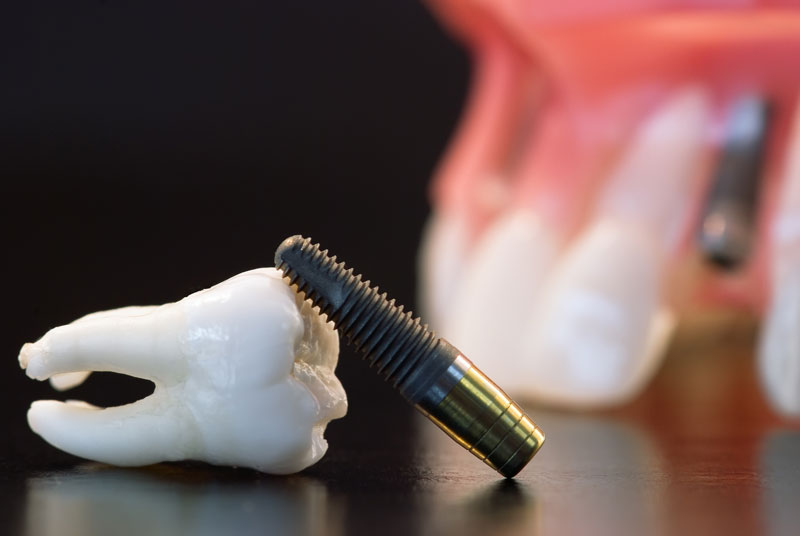
A dental implant is an artificial tooth root surgically placed into the jawbone to support a replacement tooth or prosthesis.
Most dental implant systems use titanium or another biocompatible material. The implant is positioned in the jaw where a natural tooth root previously existed.
After placement, the surrounding bone heals around the implant through a process called osseointegration.
Once sufficient stability is achieved, the implant can support:
- A single dental crown
- An implant-supported bridge
- Multiple replacement teeth
- An implant-retained denture
- A fixed full-arch restoration
The FDA explains that dental implants are surgically implanted devices used to restore chewing ability or appearance and support restorations such as crowns, bridges, and dentures.
How Do Dental Implants Work?
A dental implant typically involves three primary components:
The Dental Implant
The implant fixture is surgically positioned in the jawbone and serves as the replacement for the missing tooth root.
The Abutment
An abutment connects the implant fixture with the visible restoration.
The Crown or Prosthesis
The final crown, bridge, or full-arch restoration creates the visible and functional replacement teeth.
After implant placement, osseointegration allows the surrounding jawbone to form a stable connection with the implant surface.
Healing can take several months depending on the patient, implant location, bone quality, and complexity of treatment.
For a detailed look at the process, read our dental implant procedure guide.
What Are the Benefits of Dental Implants?
Dental implants provide benefits that go beyond filling a visible space in your smile.
1. Dental Implants Can Restore Chewing Function
Missing teeth and unstable dentures can make certain foods difficult to eat.
Because implants are supported by the jawbone, they can provide a stable foundation for replacement teeth and improve biting and chewing function.
2. Dental Implants Can Help Preserve Jawbone
Natural tooth roots stimulate the jawbone when you bite and chew.
When a tooth is lost, that stimulation disappears and the surrounding bone may gradually decrease.
An implant transfers chewing forces into the jawbone and can help maintain bone around the implant site.
The FDA lists helping to prevent jawbone shrinkage from bone loss among the potential benefits of dental implant systems.
3. Dental Implants Can Look Natural
Implant-supported crowns and prosthetics are designed to complement the shape, proportions, and appearance of natural teeth.
A single implant crown can often blend closely with neighboring teeth.
4. Implants Do Not Require Denture Adhesive
Fixed implant restorations are supported by implants rather than removable adhesive systems.
Patients with fixed implant-supported teeth do not need to remove the restoration every night or use denture adhesive to hold it in place.
5. Single Implants Preserve Neighboring Teeth
A traditional bridge generally relies on neighboring teeth for support.
A single tooth implant is independently supported by the jawbone, which means the healthy teeth next to the missing tooth usually do not need to be prepared solely to support the restoration.
6. Dental Implants Can Improve Confidence
Loose or missing teeth can affect eating, speaking, smiling, and social interactions.
Restoring missing teeth with a stable solution can help patients feel more comfortable eating and smiling around others.
What Are the Pros and Cons of Dental Implants?
Understanding the pros and cons of dental implants is important before deciding on treatment.
Pros of Dental Implants
- Stable tooth replacement
- Natural appearance
- Strong chewing ability
- Jawbone stimulation
- Fixed rather than removable treatment options
- No denture adhesive for fixed restorations
- Single implants do not rely on adjacent teeth
- Can replace one, several, or all teeth
- Potential for long-term service
- Daily care can be similar to natural teeth
Cons of Dental Implants
- Higher upfront cost than some alternatives
- Requires a surgical procedure
- Healing takes time
- Not every patient is immediately eligible
- Bone grafting may sometimes be necessary
- Infection or implant failure can occur
- Ongoing hygiene and professional maintenance remain necessary
- Prosthetic teeth may require repair or replacement over time
AEO Summary: Dental implants provide excellent stability, function, and long-term tooth replacement, but they involve surgery, cost more initially, and require sufficient healing and maintenance.
How Long Do Dental Implants Last?
Dental implants are designed to provide long-term tooth replacement and may function for many years when properly maintained.
There is no guaranteed lifespan for an individual implant.
Longevity can depend on:
- Daily oral hygiene
- Gum health
- Bone health
- Smoking or tobacco use
- Teeth grinding
- Bite forces
- Medical conditions
- Implant location
- Regular professional dental care
It is also important to distinguish between the implant fixture and the implant restoration.
The implant fixture placed within the bone may remain stable for many years, while the crown, bridge, or full-arch prosthesis attached to it can experience normal wear and may eventually require maintenance or replacement.
What Is the Dental Implant Recovery Time?
Initial recovery after straightforward dental implant placement is typically much shorter than the complete osseointegration process.
Patients may experience:
- Mild soreness
- Swelling
- Minor bruising
- Tenderness around the surgical site
- Temporary dietary restrictions
Many patients return to normal daily routines relatively quickly, although the exact recovery timeline depends on the extent of surgery.
Complete healing and integration of the implant with the jawbone generally takes considerably longer than the initial surgical recovery.
The FDA notes that healing around an implant body may take several months or longer depending on the individual situation.
Why Does Dental Implant Healing Take Several Months?
The longer healing period allows osseointegration to occur.
This biological process creates the stable connection between the implant and surrounding jawbone that allows the implant to withstand chewing forces.
The exact timeline can depend on:
- Bone density
- Implant location
- Number of implants
- Whether bone grafting was performed
- Overall health
- Smoking
- Healing response
Some patients may receive temporary replacement teeth during this healing period.
Do You Need Bone Grafting Before Dental Implants?
Not everyone needs bone grafting.
However, patients who have experienced significant jawbone loss may require additional bone before an implant can be predictably supported.
Bone loss can occur following:
- Long-term tooth loss
- Gum disease
- Infection
- Trauma
- Previous extractions
Depending on your needs, oral surgery procedures such as bone grafting, ridge augmentation, or sinus augmentation may be considered as part of implant treatment.
Bone Grafting Summary: Needing a bone graft does not automatically mean you cannot receive dental implants. Grafting can sometimes rebuild areas that do not currently have sufficient bone for implant placement.
Dental Implants vs. Dentures: Which Is Worth It?
The choice between dental implants vs. dentures depends on oral health, treatment goals, lifestyle, budget, and how many teeth are missing.
Traditional Dentures
Traditional removable dentures can replace an entire arch without implant surgery.
Advantages may include:
- Lower initial cost
- No implant placement surgery
- Ability to replace many missing teeth
Potential disadvantages can include:
- Movement during eating or speaking
- Need for removal and cleaning
- Changes in fit as the jaw changes
- Possible need for adhesives
- Reduced chewing efficiency
- Lack of tooth-root stimulation to the jawbone
Implant-Supported Teeth
Dental implants can support fixed or removable restorations.
Potential advantages include:
- Greater stability
- Stronger chewing ability
- Reduced movement
- No denture adhesive with fixed restorations
- Jawbone stimulation
- More natural-feeling function for many patients
Patients who are missing most or all of their teeth can learn more about full mouth dental implants and how implants may support an entire arch of replacement teeth.
Dental Implants vs. Bridges: Which Is Better?
Both treatments can successfully replace missing teeth, but they work differently.
A traditional bridge uses neighboring teeth as anchors for a replacement tooth.
A dental implant is placed independently in the jawbone.
Dental Implant
- Replaces the tooth root
- Does not typically require reshaping healthy neighboring teeth
- Stimulates surrounding bone
- Requires surgery
- Requires healing time
Dental Bridge
- Does not require implant placement
- Can sometimes be completed more quickly
- Uses neighboring teeth as support
- Does not replace the missing root
- May be particularly appropriate if neighboring teeth already require crowns
Neither option is universally better.
The health of the adjacent teeth, jawbone, gums, bite, treatment timeline, and patient preferences should all be considered.
Are Dental Implants Worth the Cost?
For many patients, dental implants are worth the cost because their value extends beyond replacing the visible portion of a missing tooth.
The treatment can restore function while providing a stable, long-term solution.
When evaluating value, consider:
- Expected longevity
- Chewing ability
- Stability
- Appearance
- Bone preservation
- Effect on neighboring teeth
- Maintenance requirements
- Comfort
- Quality of life
A treatment with a lower initial price is not necessarily less expensive over an entire lifetime.
For example, another restoration may require replacement, adjustments, adhesives, relining, or additional dental treatment over time.
That does not mean implants are automatically the most economical choice for every patient. Rather, patients should compare long-term value instead of upfront price alone.
How Much Do Dental Implants Cost?
There is no universal dental implant price because treatment varies considerably between patients.
Factors affecting dental implant cost may include:
- Number of implants
- Number of missing teeth
- Type of restoration
- Tooth extractions
- Bone grafting
- Sedation
- 3D imaging
- Surgical complexity
- Laboratory work
- Temporary restorations
- Final prosthesis
- Follow-up care
Replacing one tooth has very different requirements than reconstructing a complete arch.
Our guide to dental implant costs, financing, insurance, and payment options explains these factors in greater detail.
Single Tooth Implant vs. Full Mouth Dental Implants
Dental implants are not one specific procedure.
Treatment can be adapted to different levels of tooth loss.
Single Tooth Implant
A dental implant can support one crown when a single tooth is missing.
Multiple Dental Implants
Several implants may support individual crowns or an implant-supported bridge when multiple teeth are missing.
Full Mouth Dental Implants
Patients with extensive tooth loss or failing teeth may consider full mouth dental implants.
Rather than placing an implant for every individual missing tooth, a full-arch prosthesis can often be supported by several strategically positioned implants.
Are Full Mouth Dental Implants Worth It?
For patients dealing with extensive tooth loss, failing teeth, or unstable dentures, full-mouth implant treatment may provide considerable improvements in stability and function.
Potential benefits include:
- A complete arch of replacement teeth
- Improved chewing ability
- Greater stability than conventional dentures
- Fixed treatment options
- Reduced dependence on removable appliances
- Natural-looking smile restoration
However, full-mouth treatment is also more complex than replacing a single tooth and requires a larger financial investment.
Patients should receive a complete treatment plan explaining the surgical process, prosthesis, expected timeline, maintenance requirements, and total cost.
Who Is a Good Candidate for Dental Implants?
Many adults with missing teeth can be considered for dental implants.
Important factors include:
- General health
- Gum health
- Bone availability
- Ability to heal normally
- Oral hygiene
- Smoking or tobacco use
- Existing dental disease
- Commitment to follow-up care
Bone loss alone does not necessarily eliminate someone as a candidate because grafting may sometimes make implant treatment possible.
The FDA recommends discussing your overall health, potential benefits and risks, and individual candidacy with your dental provider before proceeding with implant treatment.
Who Might Need to Wait Before Getting Dental Implants?
Implant surgery may need to be delayed when active oral health problems are present.
These may include:
- Untreated gum disease
- Active infection
- Certain uncontrolled medical conditions
- Inadequate bone requiring reconstruction
- Poor oral hygiene
Rather than automatically ruling out implant treatment, these conditions may need to be addressed before surgery.
What Are the Risks of Dental Implants?
Dental implants have potential risks just like any surgical treatment.
Possible complications include:
- Infection
- Implant failure
- Delayed healing
- Injury to surrounding tissues
- Nerve-related symptoms
- Sinus complications in certain upper-jaw cases
- Difficulty cleaning around the implant
- Loosening or wear of restorative components
The FDA’s dental implant information provides additional information about the potential benefits and risks of implant systems.
Choosing an appropriate treatment plan and maintaining excellent oral hygiene are important parts of long-term implant care.
Are Dental Implants Hard to Maintain?
For many patients, caring for implants is similar to caring for natural teeth.
Daily care should typically include:
- Brushing twice a day
- Cleaning between teeth and implants
- Using floss or other recommended interdental cleaners
- Attending routine dental appointments
- Professional cleanings
- Monitoring gum health
Implants cannot develop cavities in the same way natural teeth do, but the gums and bone supporting an implant still require excellent care.
Are Dental Implants Worth It for One Missing Tooth?
A single implant can be particularly valuable when the teeth next to the missing space are healthy.
Instead of preparing those teeth to support a traditional bridge, an implant can independently support the replacement crown.
This allows patients to restore the missing tooth while leaving neighboring healthy teeth largely independent.
For a broader look at available solutions, see our guide to dental implants and options for missing teeth.
Dental Implants at New Creation Dental Care in Lake St. Louis, MO
At New Creation Dental Care, implant treatment is based on each patient’s individual oral health, needs, and goals.
Depending on the extent of tooth loss, options may include:
- Single and multiple dental implants
- Implant-supported restorations
- Full mouth dental implants
- Tooth extractions
- Bone grafting and oral surgery
- Treatment for patients with complex dental needs
Dr. Matthew Boscia, founder of New Creation Dental Care, is certified by the Misch Implant Institute. You can learn more about Dr. Matthew Boscia and the approach to comprehensive care at our Lake St. Louis office.
Find Out Whether Dental Implants Are Worth It for You
Dental implants can represent a larger initial investment, but cost alone does not tell the complete story.
Their ability to restore stable chewing function, replace missing tooth roots, preserve neighboring teeth, support jawbone health, and provide long-term tooth replacement can make them a worthwhile treatment for many patients.
The most useful question is not simply “Are dental implants worth the cost?”
It is:
“Which tooth replacement option will provide the best combination of health, function, longevity, comfort, and value for my situation?”
If you are considering dental implants in Lake St. Louis, MO, schedule a consultation with New Creation Dental Care to discuss your options, expected treatment timeline, costs, and whether dental implants are appropriate for you.